
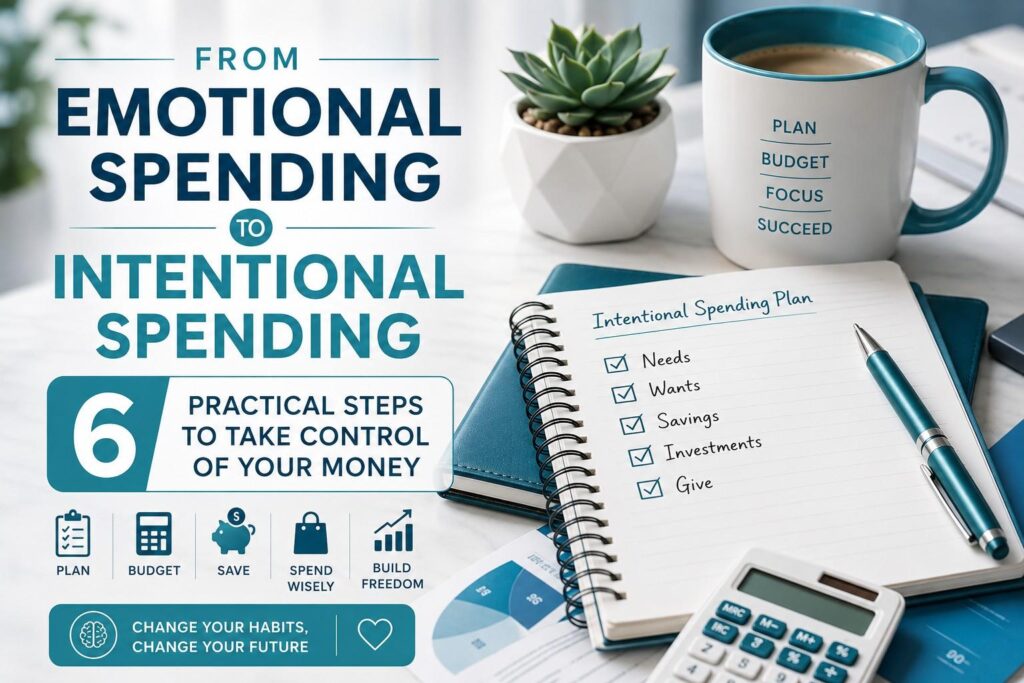
From Emotional Spending to Intentional Spending; 6 Practical Steps to Take Control of Your Money
One of the biggest financial mistakes I see people make is impulse spending.
We spend money on the things we love fashion, vacations, eating out, gadgets, or anything that gives us instant joy. But if we’re not intentional, those small decisions can quietly sabotage our finances. Yesterday, I went shopping, and it made me reflect on how much I’ve changed.
Let me declare I love fashion this fashion is old fashion timeless fashion and ofciurse this comes with the pricetag I still remember when I got my first job in 2010.There was a colleague whose fashion sense I really admired. We all wore the same office uniform, but I still wanted to look extra smart. Every month after receiving my salary, I would go shopping for clothes.
The problem?I wasn’t asking myself, “What will I eat for the rest of the month?”I didn’t have a budget.I didn’t have a spending plan. I simply spent because I wanted to feel good.
Looking back, I realize I was spending emotionally I was emotional spender , not intentionally.
Fast forward to today…Yesterday, I did what I call intentional shopping, I am proud of myself
Two months ago, after arriving in this foreign country, I visited several malls not to buy anything but to do window shopping.I walked through the stores and made a list of everything I genuinely wanted.Not just for myself, but also for my children and my husband because I wanted to bring them gifts when I return home.
I wrote everything down.I didn’t buy anything immediately.Then, over the past two months, I included those purchases in my budget.
I already had savings set aside, and one month in advance I also discussed it with my husband. I told him I was planning to shop, so he had enough time to think about it and include it in his own plans before giving me additional money.
Nothing was rushed.Nothing was emotional.Everything was planned.Even now, my shopping isn’t finished because my list is still long. But every purchase I make is guided by that list not by emotions or attractive displays in the store.
So what does intentional spending look like?
1. Write down what you want.
Don’t rely on your emotions in the moment. Create a list of the things you genuinely need or value.
2. Give yourself time before buying.
Window shop first. Think about it. If you still want it after a few weeks, it may be worth planning for.
3. Include it in your budget.
Every purchase should have a place in your budget before you spend the money.
4. Plan for large purchases early.
If you need extra money, don’t wait until the last minute. Have the conversation early and plan ahead.
5. Don’t let sales trick you.
Just because something is on sale doesn’t mean you should buy it.A discount is only a good deal if you had already planned and budgeted for that purchase.Otherwise, a sale is simply an unplanned expense.The goal isn’t to stop enjoying your money.
The goal is to enjoy it without sabotaging your financial future.
Intentional spending gives you the freedom to buy the things you love—with confidence, without guilt, and without financial stress.
If you’re ready to stop emotional spending and build lasting financial habits, our Pre-Retirement Planning Program is designed for you.
The first three modules focus on practical behavioral change, where I’ll guide you through practical exercises and proven strategies to help you transform the way you think, plan, and make financial decisions.
Join today and enjoy our Early Bird Discount. Simply WhatsApp me the word “RESET” to learn more and secure your spot Join us our Pre retirement Program
—
Written and prepared
I learn something,the coming salary iwill spend ntentionally.